- Does ethical, truthful marketing actually work? Fear and pressure tactics work, in the same way a narcissist’s tactics work.
- Telling the truth is the better strategy. For sensitive, attuned audiences, sales tactics actually repel the people you want to reach.
- The research says plausible, partly supported, but not 100% proven. Fake urgency is now being fined, and honesty as a performance gets caught out.
- So why doesn’t everyone do it? Because it’s all we’ve ever known. Unlearning it means shadow work.
Whenever I talk to people about the way we do marketing here at The Other Way, time and time again what I hear back is:
"Oh wow, that sounds cool. Ethical, heart-led, truthful marketing… Love it! But, ummm… Does it actually work??"
It's a fair question. Because ‘the way’ we’ve all been taught to do marketing (you know the one where we use fear-based tactics, scarcity, threat, emotional manipulation and hijack people’s dopamine receptors and nervous systems… 🙄)
It works well. Really fucking well.
So here's the honest answer, including the parts that don't just flatter the way we do things around here.
What I see repeatedly happening in my work with heart-led and spiritually-aligned clients is that not telling the truth doesn't actually work either.
Mostly because their audience and ideal clients are highly sensitive, attuned, and woke. They can smell bullshit and icky sales tactics a mile off, so the typical marketing tactics and sales funnels actually repel their ideal clients.
What those people want is truth, the kind they can feel in their fucking bones.
Now, look, I haven't run an official study on this, it's just what I've watched with most of the clients I’ve worked with in the healing or empowerment focused communities.
Yes, the other stuff works …obviously
Well yeah, duh… of course it works.
The gross tactics we all hate ‘work’ in the same way a narcissist uses tactics to get someone to fall in love with them.
Manipulation strategies and coercion tactics work... but that's not the only way to make someone fall in love with you.
For most people, just being yourself is enough to make someone fall in love with you.
You know, I actually saw an ad last week that is a pretty good example of what not to do.
It opened with "Don't join us and here's what happens…" and then proceeded to tell me:
I'd get sucked back into the million things on my plate, three months would pass, I'd run another webinar the old way, and by January my cohort still wouldn't be full.
Then it reminded me that there are people out there who need the transformation I offer and can't get it while I stall.
And the cherry on top: "the doors are closing", it’s super cheap, and all the money goes to charity.
What I heard:
A threat, a guilt trip dressed up as care, a pressured deadline, and a charity badge that makes it awkward to criticise.
And yes, this kind of thing works, at least for a while.
EWW 🤢
So here’s the science-y bit on all this:
A big review of fear appeals (127 articles, nearly 27,000 people) found that fear-based tactics generally do work, though the effects do range depending on whether the message also gives people a clear, believable thing they can do about it.
Fear without a way out mostly just makes people defensive (Witte and Allen, 2000). Fear WITH an easy way out works best… which is exactly what that ad did: scare you, then hand you a cheap, quick way out.
In a set of randomised experiments on dark patterns (that's the actual research name for sneaky design and pressure tactics, LOL), mild tactics roughly doubled how many people signed up.
And aggressive tactics roughly quadrupled it, but the aggressive ones also caused a real backlash...
-
No tactics
Protect your data and credit history?
Accept Decline11% kept the plan -
Mild tactics
Protect your data and credit history?
Accept (recommended) other options26% kept the plan -
Aggressive tactics
Protect your data and credit history?
Accept I don’t want to protect my data or credit history42% kept the plan
Why we do things The Other Way
Call me old fashioned, but I actually believe just being yourself is enough.
Telling the truth is the better strategy.
As far as I can tell it works, and it definitely feels much healthier.
I know how that sounds though. If you're telling the truth because it's a strategy, is that still telling the truth? Or just another marketing tactic?
I've sat with this for quite a while and I don't think it’s my call to make.
It’s yours.
Your truth detector, your body, your ‘yuck’ or ‘yum’ gets to decide.
The power gets handed back to the individual making the choice.
And yes, I run a business, I'd like it to pay me.
I also want to live in a world where people say what's real to each other.
I'm calling “truth” a "strategy" because it keeps me honest.
What does telling the truth look like in a piece of ethical marketing?
Take that same ad. I'd start by asking a question: Is your cohort still not full?
So then you the reader decide what’s true for you, is it?
Then I'd tell you the honest limit and offer proof before asking you to buy something from me: Nobody can promise a fifteen day challenge will fill it, and here’s what actually happened last time: [real numbers].
Then I'd say what you actually get, name the price and where the money goes, I’d give you the start date as a start date and not a threat.
That's it. No fear, no guilt, no ticking clock.
Where the research evidence stands
I'm going to be straight about this part, because it would be a bit rich to write an essay about truthful, ethical marketing strategy and then oversell my own proof.
The honest summary: it's plausible, and partly supported, but not 100% proven. (Hmm, is anything ever?)
Nobody I could find has officially tested it in the coaching or any other high-trust personal service industry, so for the clients I work with, it’s a pretty sound bet.
Here’s what I found in favour of telling the truth:
Social Experiments
-
Naming a small, real flaw after the good stuff tends to raise trust (Ein-Gar, Shiv and Tormala, 2012).
A big flaw, or a flaw mentioned first, hurts. So "honest" doesn't mean "confess everything up front."
Source: Ein-Gar, Shiv and Tormala (2012)
-
Raising the objection and then answering it beats just confessing it (Allen and colleagues; Crowley and Hoyer).
A limit with nothing done about it is the weakest version.
-
Apologising for something people already noticed helps.
Apologising for something nobody noticed backfired (Jenkins and colleagues). Don't invent problems to look humble.
Source: Jenkins, Fombelle and Steffel
-
People who label themselves "authentic" get marked down for it, in a study of 450,000-plus reviews (Kovacs and colleagues).
Honesty works better shown than announced. I'm aware of the irony of announcing that.
Source: Kovacs, Carroll and Lehman
-
Fake urgency is now being fined.
The US FTC lists fake countdown timers and false scarcity as dark patterns, an EU check of 399 online shops found more than a third used at least one pressure trick (42 had fake countdown timers), and the UK's CMA has started enforcement on misleading timers. Real deadlines are fine. Made-up ones are the problem.
Source: FTC; EU consumer sweep; UK CMA
Examples of Radical Honesty in Branding and Marketing
-
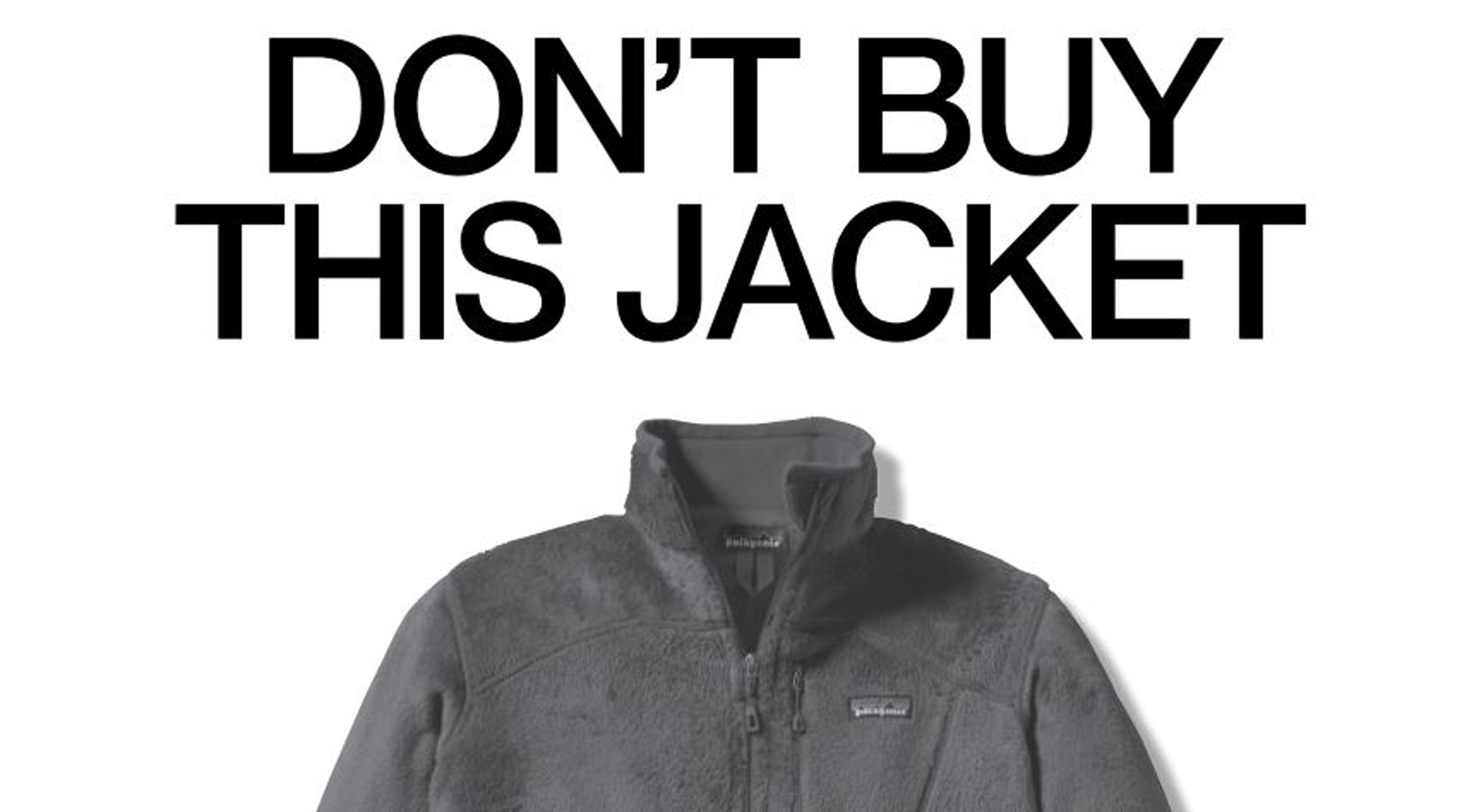
Image: Patagonia / The New York Times, 25 Nov 2011, via patagonia.com · Source: davidgelles.substack.com Patagonia told people not to buy its jacket, and sales rose the next year. They also opened 14 new stores that year. Patagonia has never said the ad did it.
-
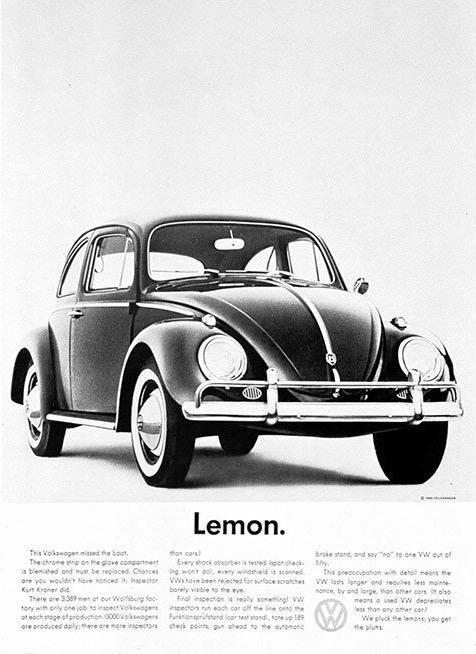
Image: Volkswagen AG / Doyle Dane Bernbach, 1960 (Art Director Helmut Krone, copywriter Julian Koenig, photographer Wingate Paine), via volkswagen-group.com · Source: en.wikipedia.org Volkswagen (around 1960) ran a full-page photo of a Beetle with one word under it: "Lemon." An inspector had rejected that car over a tiny blemish. The honesty showed how picky their quality checks were.
-
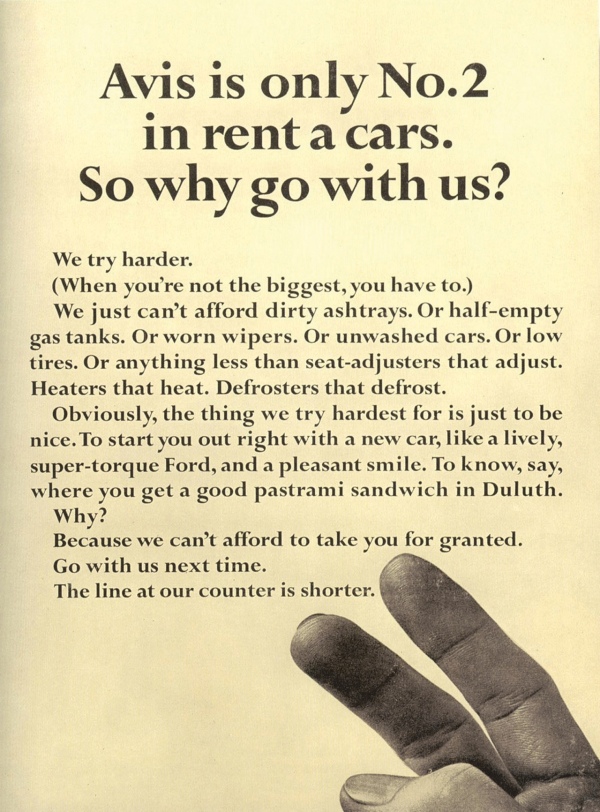
Image: Avis / Doyle Dane Bernbach, c. 1962-63 (copywriter Paula Green, art director Helmut Krone, per Swipefile), via mediashower.com Avis (1962) said it out loud: "We're number 2, so we try harder." Reports say it went from a loss to a profit the following year (though other things changed at Avis that year too).
-
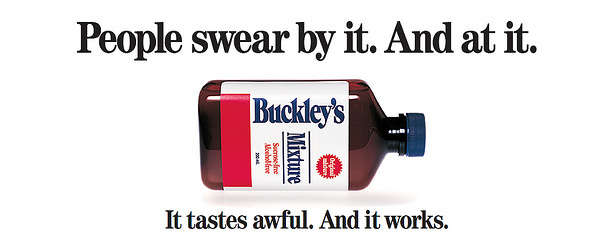
Image: Buckley's (Canada), 'Bad Taste' campaign print ad ('People swear by it. And at it.'), as shown by DAC Group, via dacgroup.com · Source: strategyonline.ca Buckley's cough syrup: "It tastes awful. And it works."
-
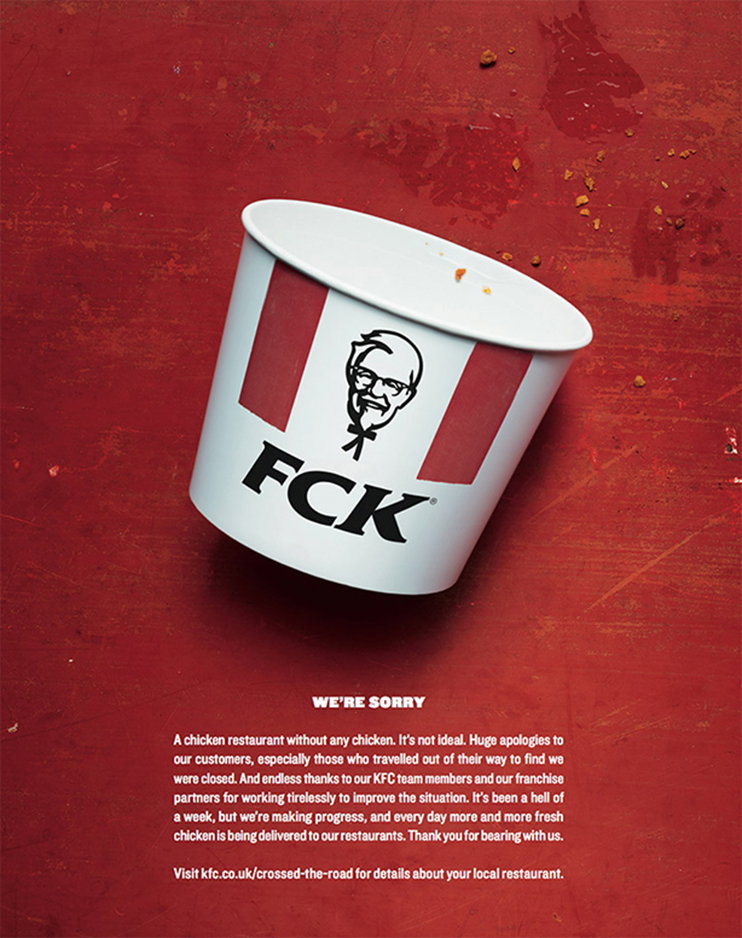
Image: KFC UK / Mother London, Feb 2018, via itsnicethat.com · Source: marketingweek.com KFC (2018) ran out of chicken, rearranged its logo to spell FCK, and apologised. And it landed really well.
-
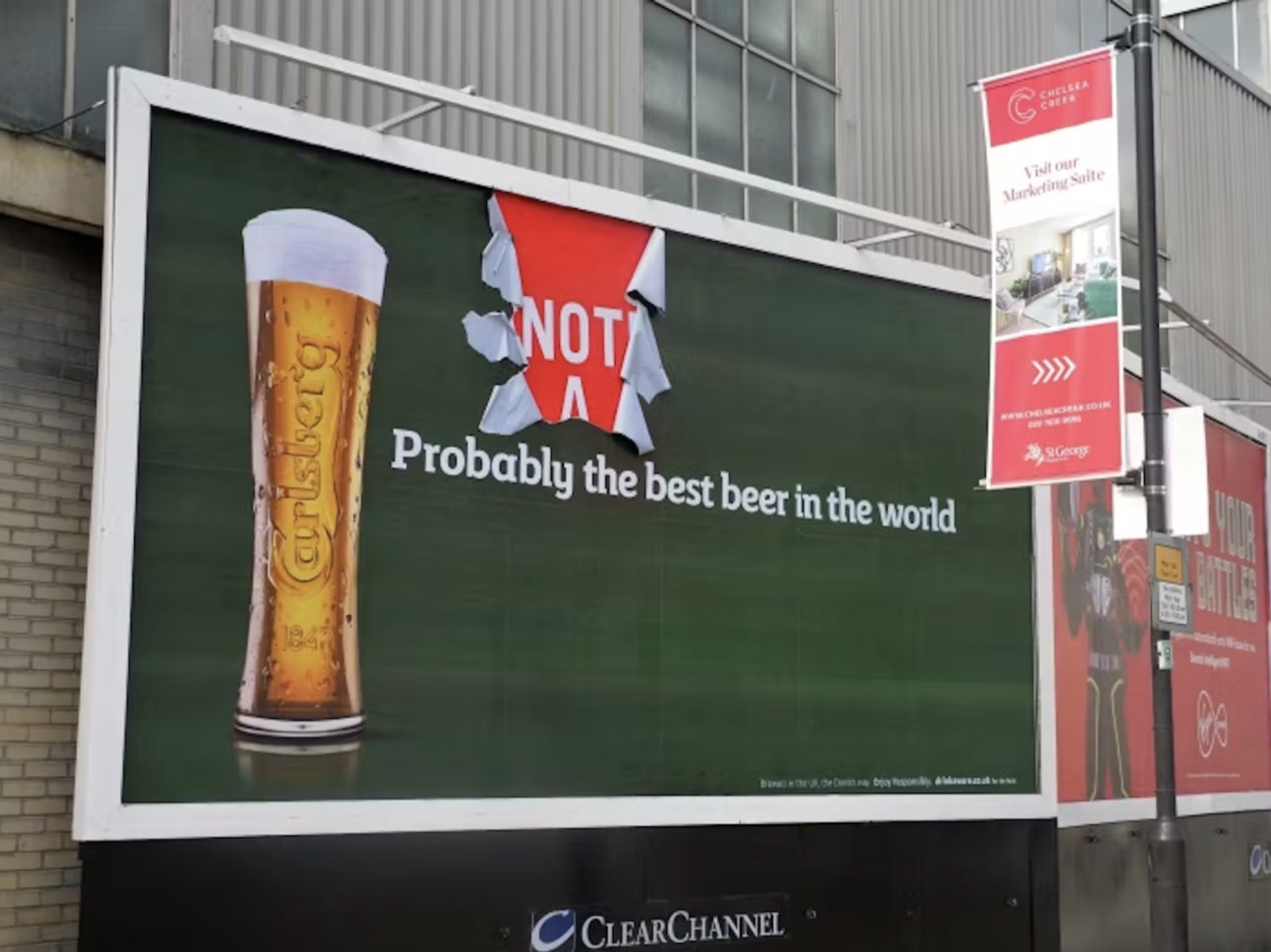
Image: Carlsberg UK, 2019, via The Drum, via thedrum.com · Source: marketingweek.com Carlsberg (2019) spent decades saying "Probably the best beer in the world," then ran ads saying "Probably not," using real mean tweets about its beer, and rebrewed the beer.
The interesting part? Honesty as a performance actually gets caught out too.
Oatly and Innocent were both ruled against by the UK ad regulator for claims that didn't hold up, after building a whole personality on being candid.
So why doesn't everyone do it?
Because manipulation, coercion and abusive tactics in advertising and the media have been normalised. Just look at the relationship dynamics in any popular soap opera, or the lyrics of most pop music written about heartbreak and cheating and toxic love obsession.
We have ALOT to unlearn.
Which requires us to do the work… shadow work. Which is uncomfortable 🫣
For example, when I try to write the honest version of a launch email, the first thing that arrives is usually a feeling and not a sentence (because I’m a human being, not an AI-prompt generated sales email):
- Shame, mostly, about not having enough proof yet.
- Guilt about asking for money.
- Fear that nobody will come.
- Grief, sometimes, for all the times I did it the old way and it felt gross.
- Anger at being taught that the old way was the only way.
The pressure tactics are very often the fastest route around those feelings. Of course they're popular.
Being honest means feeling the thing instead of covering it with a countdown timer. That's the part nobody puts in the sales funnel.
Why we walk the path of ethical marketing
I could stop there and say that telling the truth in marketing not only works but it also just feels better.
But the reason we do things The Other Way here is much bigger than conversion rate data.
We want to live in a world where truth, love, kindness and compassion are normal, and where marketing is one of the places we practise.
For us, branding and marketing has always been about storytelling and world-building.
And the stories we tell create the reality we live in, they literally shape the world we live in.
So The Other Way is about building the kind of world we want to live in, in integrity.
Becoming the change we wish to see in the world. And supporting others to do the same.
That's who we are. That’s what we stand for. That’s what we do.
What we’re testing out right now
In November, we’re launching The Sounding Method a second time.
It’s the two week social media strategy we use to turn the content creator job you never signed up for into a daily habit that makes posting consistently easy, sound like you, puts your work in front of the people you actually want to serve.
I'm not going to sit here and promise it will 10x your following and will bring you $10K months, because that isn't what it's for.
(Spoiler alert: going viral isn’t going to bring you $10K months anyway… Most clients I work with who end up with massive IG followings still struggle to build trust and convert because they are either using out dated yucky strategies, or no strategy at all!)
What it's built to do is help you nail your messaging and positioning so that your ideal clients can clearly identify themselves and to create a healthy and authentic relationship with social media (which is just one part of the ecosystem that needs nurturing in your business) so that you can see what actually works and converts, as well as what other parts of your marketing ecosystem needs tending to in order for you and your business to thrive.
If this sounds like your kinda thangggg click the button below for more information.
Tell me about The Sounding Method→
Big love,
Blossom